Sunday, October 12, 2008

SZ Tale 12 - First FF Duty

My first FF Duty... very excited. Reached zoo at 9am and did a biodome tour first to see where are the animals so that I will know what animals are around today should I conduct a biodome tour today.

And I could just wile the whole of Sunday away, stuck in the biodome, see the animals sleeping, eating, swimming, flying, running...


Caught sight of the Tree Kangaroo.. just can't resist its cuteness... curl up the tree. Sadly I left my camera at home and had to use my handphone as substitute camera...


The black and white ruffed lemur seems so active and yet so lonely.. because its best buddy - the ring-tailed lemur is not in the biodome today.


SLOTH! SLEEPING! SO SWEETLY!
Makes me wanna sleep though... cannot, I still got duty to do. Oh and I happened to be walking around with this family and I kindly pointed the tree kangaroo and sloth to the granny haha. The little boy was trying to catch butterflies (managed to get them land on his cap later on).. and the little girl pointed 2 bird eggs to me...

Anyway duty wise, I had only manned the fixed station today. And time flies very fast when visitors just kept asking questions and children and adult just kept getting fascinated with the live specimens...

Questions asked include:

1. Tree Nymph Butterfly
How long does the caterpillar takes to become a butterfly?

>>More facts about Tree Nymph Butterfly
  • Japanese Name: Ogomadara
  • Scientific Name: Idea leuconoe
  • Chinese Name: 大白斑蝶
  • The larvae are known to feed on plants of the species Aganosma cymosa (Apocynaceae).
  • Another species of Apocynaceae, Parsonia spiralis has also been noted as a larval host plant. By the way, parsonia is the plant used by the zoo.
  • The plant alkaloids apparently have a similar structure to the male pheromones of this butterfly, so it appears that there has been an ancient evolutionarily relationship between the butterfly and its food plant.  
  • The caterpillars accumulate the bitter alkaloids in their bodies, protecting them from predation.
  • The tree nymph is attracted to the color red, and will land on red shirts and hats.
    Source: JapanTimes
2. Mousedeer
Someone had asked about the mousedeer describing that it look like a deer but a smaller version. She then commented they were coming up to get close to her (odd because mousedeers are supposedly very shy?). She also asked if mousedeer is related to rodent or deer. (From the internet, it is of the same order as the deer.)

3. Malayan Gray Stick Insect
A father mentioned he saw a lot of the Malayan Gray Stick Insect in Malaysia in his younger days and was fascinated with the eggs. He asked about the dried skin too but at that time, I did not know stick insect moult.

Saturday, October 04, 2008

SZ Tale 11 - Animal Day

MISSION STATEMENT - WORLD ANIMAL DAY
  •  To celebrate animal life in all its forms
  •  To celebrate humankind’s relationship with the animal kingdom
  •  To acknowledge the diverse roles that animals play in our lives – from being our companions, supporting and helping us, to bringing a sense of wonder into our lives
  • To acknowledge and be thankful for the way in which animals enrich our lives
And the zoo decided to take this chance to organise an Enrichment Day today to share with the public how the zoo keeps the animals entertained. By stating examples, those with pets might get pointers on how to keep their pets occupied too.

The only problem is both the briefing and the actual event is on a Saturday so I had to take 3 buses just to head to the zoo. Just shows how “passionate” I am about the zoo right now haha.

My first half of the day is spent at the giraffe section sharing with the public the tools they use to keep the giraffe, zebra, rhino etc occupied.


This is one of the tools used. And usually food is the main motivating factor for them to explore the tools. So for this case, different type of food and scent will be put into the tubes and the giraffes will spend time trying to extract these yummy food!


This is another tool used by the zoo. For giraffes, it is hung high up the tree and the giraffe will get their treats there. For the zebras, it is placed on land for the zebras to graze upon. Oh and this bottle was used as a game in the section where kids (or adults) will cover one hand with a sock (for protection against the bottle sharp edges if any and to mimic a giraffe’s tongue) and try to find 10 grapes within 1 minute. Those succeed will get a bookmark (actually anybody who tries will get la haha). I didn’t take photo of it though (forgot). You can see how scary some children can be!!

The second half of the day I was manning the face/hand painting corner which totally freak me out because I can’t paint at all. But my friend paints well for a beginner.. she painted a snake…


And a rabbit… cute right!


Then towards the end, there were 2 brothers who were asking to be face painted into cheetahs… So while painting the 2nd brother, another boy (the one on the extreme left side)  came along and he started staring first at the 1st brother then at the 2nd brother.. because he was also painted into a cheetah. And all 3 were very fascinated with each other.. it was a rather amusing sight. I still remember one of them even mention “I look better” or something haha.. Kids…

Oh and the lady (a CA) painting is the best face/hand painter I ever seen.. She was really good. And she’s very young. In fact I had quite a fun day making friends with these CA because they were really dynamic and amazing. And they were experienced volunteering in the zoo (compared to me this hatchling).

Sunday, September 21, 2008

SZ Tale 10 - Tundra

Last project for our zoo training before we finally become full fledged hatchlings... and mine is on Tundra. Shall share with you some parts of the presentation

Introduction
  • Comes from the Finnish word tunturi, meaning treeless plain.
  • Separated into 2 types: Arctic Tundra, Alpine Tundra
  • Youngest ( 10000 years ago )
  • Coldest of the biomes ( -40°C to 18°C )
  • Simplest ( species and food chain )
  • Darkest and brightest ( 24 hour darkness , 24 hour sunshine )
  • Least inhabited by humans
  • Most delicate ( first to reflect any change )

Food Web


The tundra food web is simple with a few numbers of tundra plants and animals. With fewer species, it is easy to disrupt this simplified equilibrium; the disappearance of one species could affect the entire ecosystem. Because of constant immigration and emigration, the population continually oscillates.

Undesirable Human Activities
  1. Mining and drilling
    Popular in arctic tundra areas because they tend to be rich in mineral resources
  2. Oil drilling
    Oil pollutes the ground and water and kills animals that come in contact with it. No plants or animals will return to an area where an oil spill has occurred for decades or even longer.
  3. Global Warming
    Arctic tundra's winter will be shortened, melting snow cover and parts of the permafrost, which will result in the flooding of some coastal areas. Tundra being the most fragile biome it will be the first to reflect any change in the earth.

Need for Conservation - People
Livelihood of native (Inuit aka eskimo) affected. The inuit still inhabit these arctic regions. They survive by living off tundra animals.


Source: Greenlandholiday

Need for Conservation - Environment
The low production of the terrestrial ecosystems makes the Arctic tundra particularly sensitive to land degradation and erosion. Annual melting of the topsoil above the permafrost layer combined with damage to the vegetation cover by human activities can lead to erosion. This process is further exacerbated by slow vegetation regrowth.

Conservation Message

Saturday, September 20, 2008

NLB Garden Walk

I love the library...
I love the nature..
Thus I cannot ... miss this NLB garden walk at all

NLB Garden walk tours are conducted every 1st and 3rd Saturday of the month (except Public Holidays) from 4 pm to 5.30 pm in the National Library (near Bugis MRT).

I was there at the 1st Saturday of Sept mugging my zoo test when the guide came and advertise the tour. Thus I made up my mind to come back 2 weeks later to join the tour.

On that day, I thought it started at 4.30 pm and was taking my own sweet time to reach there. Luckily the moment I stepped into the library, they were just gathering. And they even gave some souvenirs to us, the participants. Considering the tour is free, it came as a shock to me. What impressed me more is the guide (I followed the English guide), because of how well prepared she is. I went to this walk partly to see how other guides conduct their tour (having been so impressed by the botanical garden tour guide) and I learnt a lot from her.

She started the tour by giving us each a list of the plants we can find in NLB and some books we can reference from. Afterall we are in the library so of course must publicise the books and encourage us to borrow haha. Then she started the touring around level 1.

Peacock Plant, Prayer Plant

I like this plant for its unique feature of being in a prayer position when the sun sets due to a knot in its stem, allowing it to "open" and "close". It is sensitive to sunlight, and its pattern is quite special. Oh and one can see such plant in the zoo too haha...

Young Frond

New leaves typically expand by the unrolling of a tight spiral called a crozier or fiddlehead. This uncurling of the leaf is termed circinate vernation. (Source: Wiki)

Giant Fish Tail Palm

I like this palm alot. Looks like fish tail right?

Taking a look at the view from the top... about the 5th level of NLB.. supposedly it should be a nice view but guess my camera was unable to capture it...


Umbrella Tree, Octopus Tree

Another cute plant ... seems like you can hide from the rain with this tree.

Bamboo

I always like the view at B1 with the bamboo trees outside. Now that I'm taking it top down, it looks just as lovely. At this point, the guys were all sharing the uses of bamboo... Oh ya they mentioned about bamboo flowers every 35-50 years and the flowers will attract the rats. This will cause the rat population to rise and rat infestation to happen where there might be a shortage in food after all the flowers are eaten. One of nature at work's phenomenon. Hmm you can read more about it here.

Sweet Paddle Plan, Sweet Prayer Plant

Similar to the prayer plant, it will "open" and "close" by the availability of light.

Peppermint

Always like peppermint plant... that minty feel...

Windowleaf Plant, Swiss Cheese Plant

Another plant that left a deep impression on me. Such holes allowed sunlight and rainwater through which will help those plants below it. And these natural holes are supposed to keep insects from eating it. The mentality is that when the insects see holes, they will feel that someone has eaten it and will not want to feast on it. Haha good disguise. More about it here.

Plants in your purse

The tour guide ended the tour by saying we carry plants in our purse too. I'm impressed by the laminated notes she made and the "props" (e.g. a bottle of figs - oh and she also mentioned the story of the wasp and fig which I heard in botanical garden then) she brought. She was also very nice.. came and tell me I can take a photo of this.. and was patiently holding it still for me to capture the shot. Really thank you so much. Unfortunately I did not catch her name then.

(Extra info about the National Library from the souvenir given)

The journey begins with Sir Stamford Raffles (1823), who had a vision to instill a library within the Singapore Institution so as to "collect the scattered literature and traditions of the country". The vision became a reality in 1844 with the establishment of a private library called the Singapore Library. The institution eventually evolved to an icon Singapore fondly remembered as the Stamford Road "red brick" building.

Saturday, September 13, 2008

SZ Tale 09 - Fragile Forest Animals

While studying for the test and re-test, I fell in love with some animals/insects....

Tree kangaroo

Source: www.greenexpander.com

"They are solitary (except during breeding) and tend to ignore one another even when sharing the same tree."
  • Found exclusively in the Huon Peninsula of Papua New Guinea and the nearby island of Umboi
  • Endangered
Sidenote: A friend asked me for the difference between a kangaroo and a wallaby... Other than the fact that wallabies are smaller than kangaroos, there should be no other differences.

Tree Nymph or Rice Paper

Source: iodid.com
  • Have only 4 legs as their forelegs are poorly developed some species forelegs have been reduced to a hairy cushion
  • Caterpillar advertises their distasteful nature but using black and white stripes.
  • Chrysalis of the butterfly is golden in colour, which represents sunlit dew drops hanging on the leaves in the morning.
  • They are called Rice Paper butterflies as they float like a piece of paper in the wind.

Lucas's short-nosed fruit bat

Source: britannica.com
Unlike some bats, they do not echolocate. They rely on vision and olfaction to navigate and locate food.
Sidenote: Always am fascinated by bats since I wrote an article on them in my first homepage... sadly I lost the homepage already...

Love the habitats too...
The multi-storeyed rainforest of emergents, canopy, epiphytes, climbers, understory and forest floor
The strange looking mangrove which I came to love after understanding it better. I guess their first impression which includes their pungent smell puts people off. Human are so quick to judge hmm...
And I miss the coral reef... was taken out from the zoo.. wonder when they will bring it back.  No notes on it except that its survival is closely linked with the mangrove

Corals, which are combi-plant animal, depend on crystal clear water to photosynthesis and grow. Mangroves also neutralize nitrates and phosphates which would poison coral reefs. In return, the coral growth prevents huge waves from attacking the mangroves.
Sidenote: On 1st Oct, watched a documentary on coral reef in Kusu Island, talking about mutualism, communalism, and parasitism by Ms Glenda Chong. Very informative.. and makes me tempted to go to the Kusu Isle now... Hmm..

Anyway a lot of people had been asking me about my voluntary in the zoo.. well you can read more about it here @ www.szdocent.org
and my station is Fragile Forest! =D

Saturday, August 30, 2008

SZ Tale 08 - Botanic Garden

Today's focus is not Zoo but Botanic Garden.  Got a bit lost before I finally realised one should have alighted at the NUS bus stop...

Ta-da... and this is not the main NUS.. but the Law Faculty.  I got that blur too when Senior told me is near NUS previously...


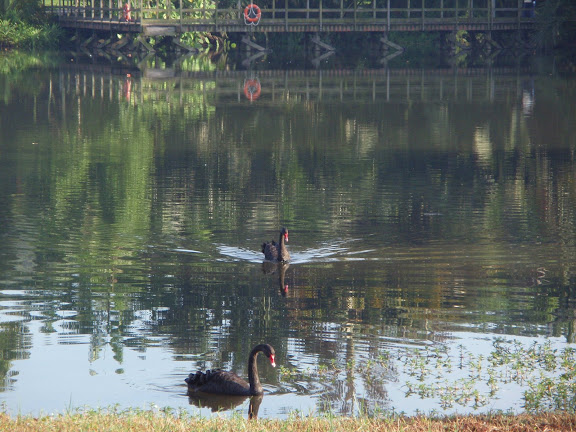
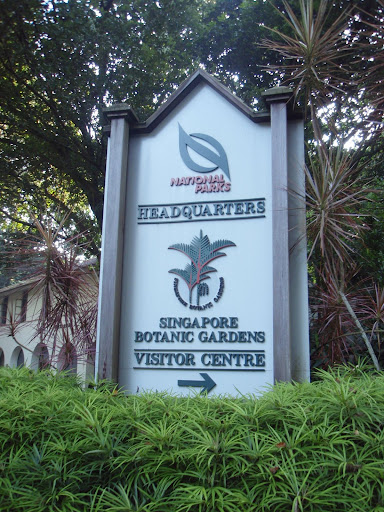
As I got lost for half an hour, I left 15 minutes to be at the visitor centre... but while rushing, I can't help but admire at the grace of the black swans.  By the way at the end of the walk, I saw the white swans too but did not managed to take pics.


And I made it to the Visitor Centre on time.  Was the earliest in fact haha.

Thus begin our guided tour (15 bucks per pax - pricey one would say BUT that guide is really good.  Learnt alot)

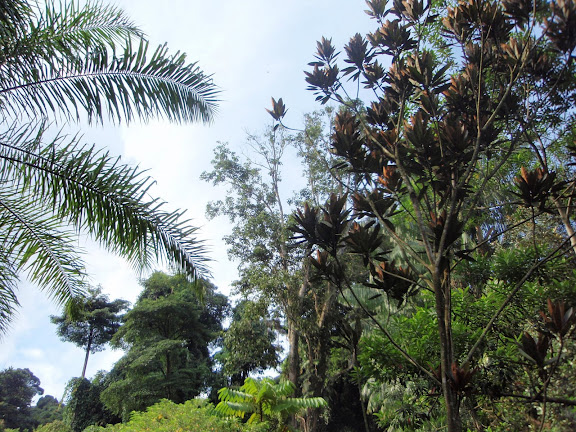
First he told us that when we visit someone's house, we will first preview the outward appearance before exploring the insides... Likewise you should first appreciate the rainforest outward view... The emergents, the canopy, the epiphytes, the climbers, the understory and the forest floor.  Hmm of course the outward view can only see the emergents and canopy bah... I was just recalling my 6 levels of rainforst "p


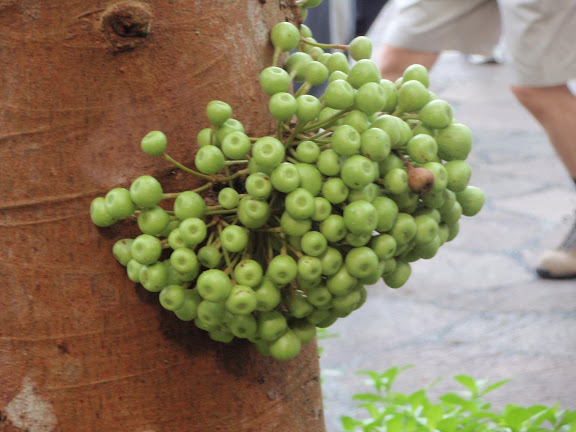
I love the sigh of this... These are called common red stem fig.
"The figs grow on the trunk, often in prolific masses. Each fig contains hundreds of tiny flowers that are pollinated by minute wasps living in association with the flowers."
Source: The sign erected beside the tree


Open up view of the fig.. where you may find a wasp.. hee hee


This is an African Oil Palm.. I remember the fruits have an oily feel...


And lots of rattan.  Guide says in the past you can find lots of cheap rattan furnitues in neighbourhood shops.  Now you can only purchase rattan furnitures in upscale Orchard road.. Sighz human are so wasteful...


I did not know these are Pandan leaves... They are so big and thick.. and probably sharp too.. beware!


Because there wasn't a structured path in the rainforest thus some rampant walkings had damaged this precious rainforest that "Do not enter" sighs had to be adapted to protect it from further damages.  (I forgot to mention that you can only find rainforest in SG in Botanic Gardens and Bukit Timah only.. and of course a replicate biodome in the SG Zoo - Fragile Forest!)


Rainforst has lots of tall trees...


And to protect them from being struck by lightning, a conductor was attached to earthed the electric charges.. Mind you, these conductors don't come cheap... I forgot the price already but I remembered we were considering changing job to attaching conductor for tall trees haha..


How do one know the age of the tree?  They used to say count the rings.. but that applies only in the temperate countries because trees "hibernate" during winter and stop growing rings... but in the tropics, it is forever summer and forever growing rings.. Thus you have to measure the circumference to know the age.  Hmm I'm suddenly thinking if humans age can be measured by waistline too?  hmmmm

Stars flower... such pretty sight.  But have you ever consider these stars are the fruits to grow the trees and how many actually succeeded?  The rainforest may seem sturdy and tough on the outside but it is actually very fragile with shallow top soil and intricate web and complex interdependence... In short, the relationships in the rainforest are complicated too =D.


Ferns.. used to love them in primary schools.  I love to see their undersides for their spores... which helps to continue their existence...


Tree Vandalism.. I really wonder what is so interesting about carving... but I do know that some love stories the protagonists will return back to the tree to see their carvings and it will send some warm fuzzy feeling.. I suppose that is call romantic.. but this?


This is call a leaf litter plant because it collects all the leaves and nutrients to sustain itself... Interesting!


Longest Palm leave...


Coke secret ingredient - The Giant Cola.  It is said that coke no longer uses this secret ingredient though...


After we bid the guide goodbye and thank him for his vast and interesting guide... we took a walk towards the food court.  On the way I caught sight of this box of dog poo bags... While I like the idea of Botanic garden providing bags for dog owners, I would much appreciate if the owners bring their own bags, that is their responsibility... Of course such box is useful should owner use up their own bags due to certain reasons...


Had a fruitful day... would I come back again? Hmm to discuss in my personal blog...

One last question though, how do bananas grow? Answer can be found here.

Thursday, August 28, 2008

Are we really serious in recycling?

Lipstick goes into burnables; lipstick tubes, ''after the contents have been used up,'' into ''small metals'' or plastics. Take out your tape measure before tossing a kettle: under 12 inches, it goes into small metals, but over that it goes into bulky refuse.
Socks? If only one, it is burnable; a pair goes into used cloth, though only if the socks ''are not torn, and the left and right sock match.'' Throw neckties into used cloth, but only after they have been ''washed and dried.'' 
Source:  How Do Japanese Dump Trash? Let Us Count the Myriad Ways

It may be an article written 3 years ago but I believed it is still in place now.  And reading it, I realised how tedious recycling is.  Anyway I was researching on how serious SG takes its recycling efforts... and after reading this article, I'm beginning to doubt if SG is just doing for display sake only.  Because our recycling bins are usually split into 2 categories, or 3 at most.  And does everybody really split their rubbish?  I know that no matter how many times I tell my mum that she shouldn't use plastic to hold the recycled paper if she is intending to throw into the mixed paper tin, she still feels that should be the way to bring down the paper.  If that is the case, then does the person collect the recylced materials really split the materials up or do they really just dump all these into one big rubbish truck and send for incineration?

Are we really serious in recycling?

Sunday, August 24, 2008

SZ Tale 07 - Insect Preservation Workshop

Zoo started with booth training again as a recap in preparation for the test 2 weeks later. Then a debrief before we attended an insect preservation workshop. Lots of hands-on as my friends chose various types of insects to preserve.

This is a Jungle Nymph Walking Stick. It is one of the most troublesome to preserve insect because there is a lot of stuff you have to dig out (obvious from its size). After you clear out the intestine and eggs etc, you pad the insect with cotton and formulant before you are done.


(Psst, fyi, many phasmids - stick and leaf insects - are able to reproduce parthenogenetically if males are absent, producing all-female offspring and thus enabling the species to survive)

Other insects preserved include the horn beetles, hissing cockroaches and scorpion...

As well as butterflies. They are the least troublesome as you just need to pry open their wings if they are still "fresh" and do some arrangment.


(Psst... This is the beautiful Taiwanese Tree Nymph. The caterpillar has a marshmallow feel touch and is poisonous when eaten.)

Else if they have been kept too long and are too dried already, you can just pin them with their folded wings.


(Psst.. This is the Common Rose Butterfly... which is not at all common I think because you can't find it in the Zoo... sob sob...)

Oh and I chose to work on the butterflies hahaha..

Sunday, August 17, 2008

SZ Tale 06

Zoo started late today... and it is the first FF training.

I was given a detailed procedure on how to set up the station. Had to take the stick insects and kingmeal worm. Quite a lot of hands on. The group was having fun taking photos too…

Then we had a biodome tour conducted by a keeper. The sun conures got attracted to the crickets that the keeper was holding (which he used to demo how the archerfish shoot their kill later) and came close to him haha.


Then we had some habitat talk and a frog talk by Dr. Leong Tze Ming because this is the year of the frogs. Had dinner and an evening walk to search for frogs and toads. They were so small and the toads were plentiful along the road. These two frog pictures were taken by one of my friend.


Some other pictures that she took can be found here.
Her photography skills is excellent.. and she is one patient photographer.

The day ended quite late and I was quite overloaded at the end but overall, it had been fun.

Sunday, August 10, 2008

SZ Tale 05 - Keeper Attachment

I started off on the wrong foot with the keeper early in the morning because I got his name wrong and he is quite a fierce (maybe strict is a better word) keeper. But then I’m not complaining because he taught me a lot actually.

First task of the day was to sweep the floor, then wash the vegetables.


They were for the manatees which kept eating constantly (more about that later). Then we had a morning tea break. I found out that the central kitchen which is primarily in charge of preparing food for animals; is also in charge of the food for the keepers (at least the 2 tea breaks.. lunch was also provided but not sure who prepared).

I was told much later on that I had to sweep the floor etc to make myself sweat. This will then open the pores to remove the perfume away and make me smell similar to the surroundings. Then when I interact with the animals, they will find me familiar. Interesting!

Anyway the animal I feed most is the manatees or sea cows or sea mermaids. They are herbivorous and use their large, prehensile upper lips to grasp the plants and guide them into the mouth. They can grazes for six to eight hours each day.


The zoo currently has 2.3 (2 males and 3 females). Eve (I hope I did not get the name wrong) is pregnant and should be giving birth anytime soon. Oh and she has been pregnant for about a year already (their gestation is about 12-14 months).


In the past, manatees were hunted for their meat, hide and oil. Today, they are threatened with habitat degradation from oil, chemical and toxic waste pollution.

Oh and the zoo has a special token feeding session where interested people can feed the manatees with carrots and potato. I had the chance to see one of the loyal feeders, a young girl. The mum told us that her daughter never fails to visit here if they visit the zoo. She did have a lovely time feeding the manatees.


Manatee Mania (Feeding session)

Venue: Splash Amphitheatre
Time: 2.00pm
Fee: S$5.00

Other than the manatees, I fed Randy the sea lion with fishes and fish heads. The other sea lions were fed by other zookeepers. The sea lions can be quite noisy, playful and extremely active.


I did not take picture of the sea lions though because they were in their holding dens. However I took some pictures of the African Penguin or Black-footed penguin or Jackass penguin as my friend likes penguins and had asked me to take some pictures for her. Not very well taken though because the penguins were pretty active too haha. Anyway I did not have a chance to feed them or look after them either.


The Jackass penguin is thus named because its call sounds like the braying of jackass or donkey.

It inhabits the coastal waters of Southern Africa and is the only penguin found on the African continent.


Foraging is done during the day, usually in small groups although as many as 3,000 penguins may congregate in one area.

Jackass penguins continue to face threats from oil pollution and introduced animals such as feral cats, which prey heavily on the chicks.


My last photo of the penguin before I ended my attachment..


I’m not sure what this bird is, forgot the name already.


These birds and the pelicans were sharing the same holding den


Then is home sweet home for me… amazingly I managed to survive my attachment and I actually left with a deeper understanding of certain things. One thing the keeper taught me was that other than the 3Rs (reduce, reuse, recycle), there is another R… he made me guessed first and I thought was Remember? Haha.. then he said Replant. Hmm now I feel so guilty because I did not think of it. He concentrated more on forestation and believed that so long we save the nature, the animals will save themselves. True because right now we are robbing them their natural habitats, that’s why they are in danger.

Anyway on the way back, the clouds and the trees ease my journey back…


Lastly I would like to share this movie with you. A kind soul uploaded it a year ago and while the video is not clear, the commentary is crystal clear and the message the commenter was trying to bring through to the audience is something I hope to share with you too.


Source: Youtube